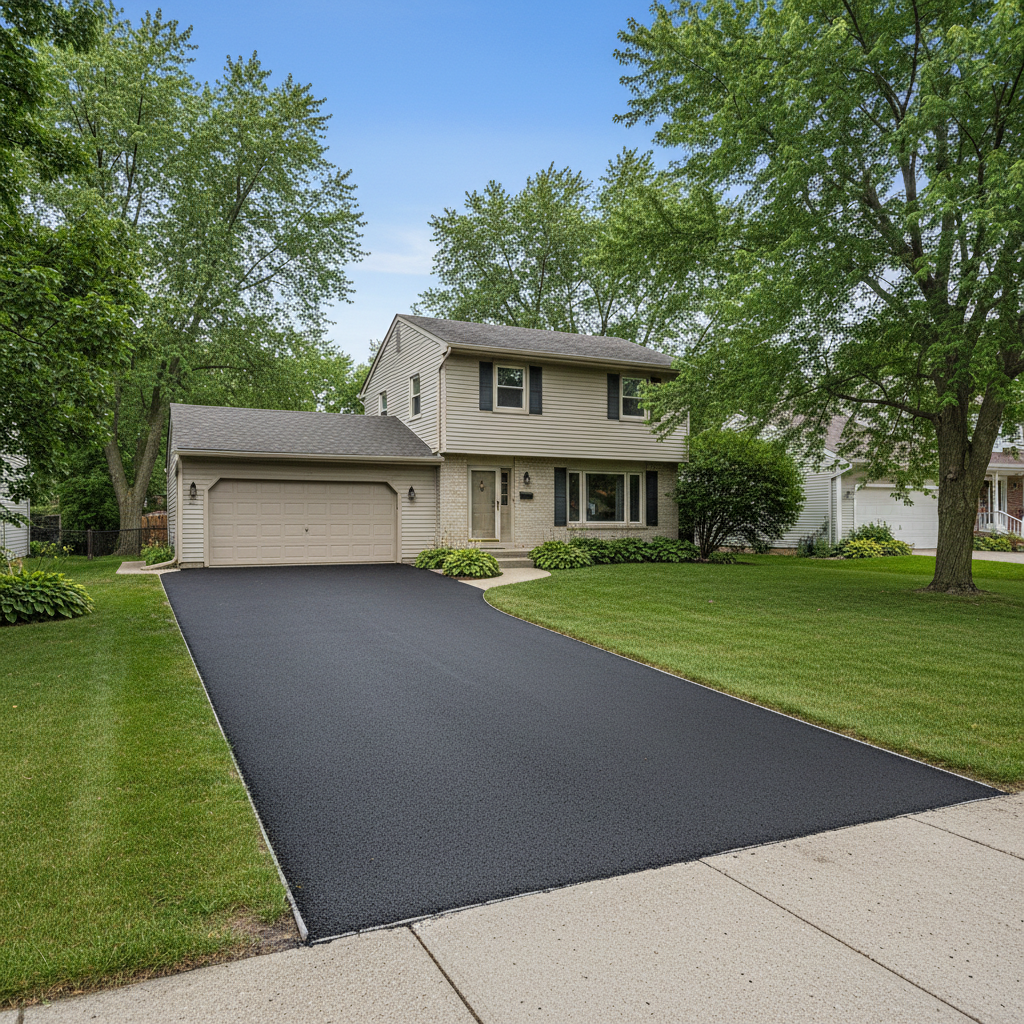
Alright, let's talk about asphalt driveways. You're probably wondering what it's going to cost you to get a new one or replace an old, cracked mess. It's a big investment, and you don't want to get ripped off, right? I get it. I've been doing this for years here in Franklin Park, and I've seen all kinds of bids come across people's tables. So, let's cut through the noise and talk real numbers.
What Affects the Price of Your Asphalt Driveway?
A lot of folks think it's just about the square footage, but that's only part of the story. There are several key things that push the price up or down. Understanding these will help you make sense of any quote you get.
- Size and Shape: Yeah, square footage matters most. A bigger driveway obviously costs more. But also, a really complex shape with lots of curves or tight turns takes more time and specialized equipment than a simple rectangle. More cuts mean more labor.
- Existing Driveway Condition (if any): Is it a brand new installation on virgin ground? Or are we tearing out an old concrete or asphalt driveway? Demolition and removal add a significant chunk to the cost. If your old driveway is just a little cracked, sometimes we can just overlay it, which is cheaper, but that's not always the best long-term solution.
- Base Preparation: This is huge, and it's where a lot of less reputable contractors cut corners. A good asphalt driveway needs a solid, well-compacted base of gravel. If your ground isn't stable – and let's be honest, with our clay soil around here in Franklin Park, that's often the case – we might need to excavate deeper, bring in more aggregate, and spend more time compacting. A weak base means your asphalt won't last. Period.
- Asphalt Thickness: Most residential driveways get 2-3 inches of compacted asphalt. If you've got heavier vehicles or just want something extra durable, you might go for 4 inches. More material means more cost.
- Accessibility: Can our trucks and equipment easily get to your driveway? If we have to shuttle material a long distance or work in a super tight space, that adds to labor time and complexity.
- Drainage: Is your property sloped properly? Do we need to install culverts or adjust grading to ensure water drains away from your house and not onto your driveway? Poor drainage will destroy a driveway faster than anything.
Typical Price Ranges for Residential Asphalt in Franklin Park
Okay, let's get down to brass tacks. I'm going to give you some realistic ranges based on what I've seen here at Marconi Band Paving Co. Keep in mind these are averages, and your specific job could be higher or lower.
For a standard residential asphalt driveway, you're generally looking at $4.00 to $8.00 per square foot for a complete tear-out and replacement, including a proper base. For a brand new installation on prepared ground, it might be closer to $3.50 to $7.00 per square foot.
- Small Driveway (e.g., 400 sq ft): Think a single-car width, not super long. You're probably looking at $1,600 to $3,200 for a tear-out and replace.
- Medium Driveway (e.g., 800 sq ft): This is more common, a two-car width. Expect $3,200 to $6,400.
- Large Driveway (e.g., 1,200 sq ft+): If you've got a long, wide driveway or a turnaround area, you could be in the $4,800 to $9,600+ range.
If your existing driveway is in decent shape and we can do an overlay (paving new asphalt directly over the old), that's usually cheaper, maybe $2.50 to $4.50 per square foot. But I'll tell you straight: overlays don't last as long as a full tear-out and replace, because the cracks from the old driveway will eventually reflect through the new layer.
What Should Be Included in Your Quote?
When you get a quote, don't just look at the bottom line. Ask for a detailed breakdown. A good quote from Marconi Band Paving Co. (or any reputable company) should clearly spell out:
- Excavation: How deep they're digging and what's being removed.
- Base Material: Type and thickness of aggregate (e.g., 6 inches of CA-6 compacted gravel).
- Asphalt Layers: Number of layers and compacted thickness (e.g., 2 inches binder, 1.5 inches surface course).
- Compaction: How they'll compact the base and asphalt.
- Grading and Drainage: Details on how water will be managed.
- Edge Restraint: How the edges will be supported.
- Permits: Who's responsible for pulling any necessary village permits.
- Cleanup: What they'll do to leave your property tidy.
- Warranty: What kind of guarantee they offer on their work.
How to Avoid Overpaying (and Getting a Bad Job)
This is where my experience really comes in handy. Don't just go with the cheapest bid. Here's what you need to do:
- Get Multiple Quotes: Three is a good number. Make sure they're all quoting on the same scope of work.
- Ask for References: A good contractor will happily provide them. Call them! Ask about their experience.
- Check Licenses and Insurance: Protect yourself. Make sure they're properly licensed and insured to work in Illinois.
- Don't Pay Upfront: A deposit is normal, maybe 10-20%. But never pay the full amount before the job is done and you're satisfied.
- Understand the Scope: If one quote is significantly lower, find out why. Are they skipping base prep? Using thinner asphalt? Those shortcuts will cost you more in the long run.
- Look at Their Work: Drive by some of their previous jobs if you can. See how their driveways look a year or two later.
A new asphalt driveway is a big investment, and you want it done right. Don't be afraid to ask questions. A good contractor will take the time to explain everything to you. You deserve a driveway that'll last, not one that's falling apart in a couple of years.