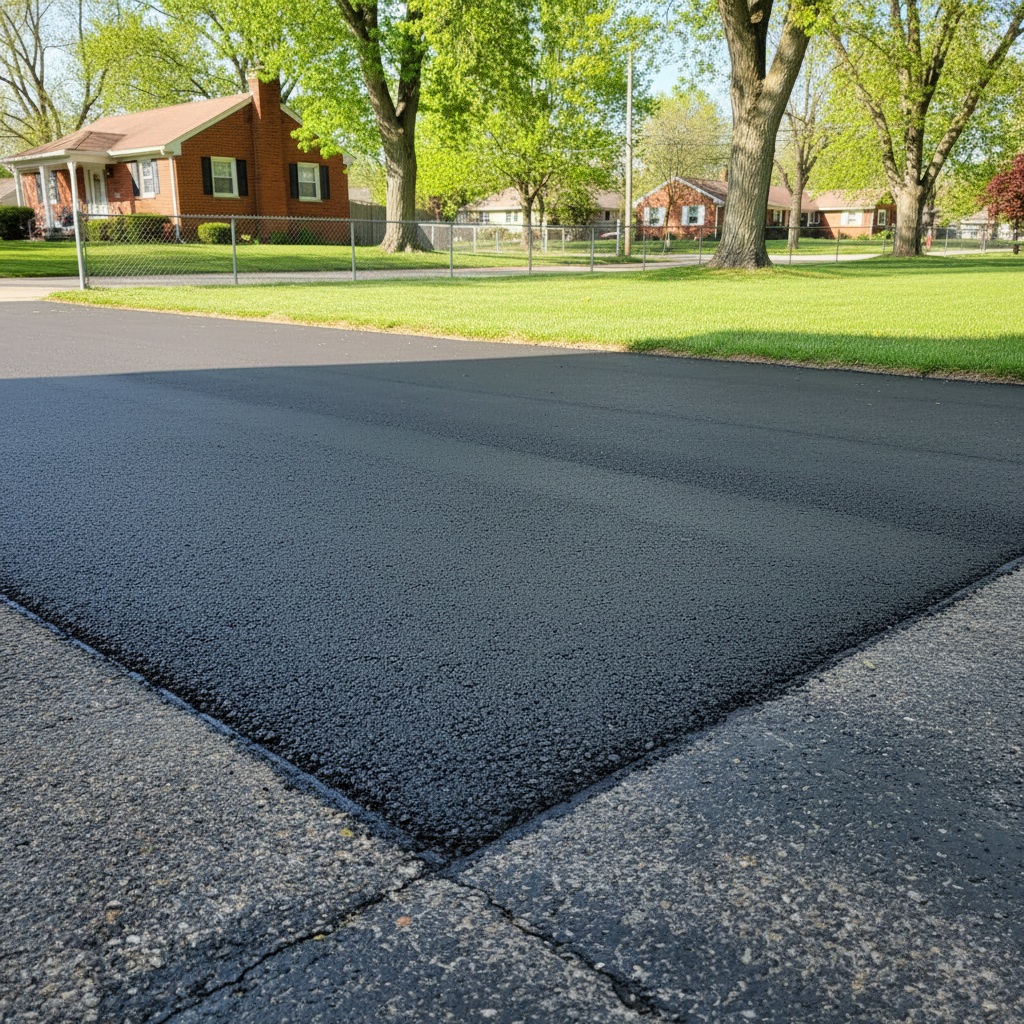
Alright, let's talk asphalt patching. I get a lot of calls from folks around Franklin Park, especially after a tough winter, asking about their driveways and parking areas. It's usually a crack, a pothole, or just some general wear and tear that's starting to look bad and, frankly, get dangerous. You've probably got questions, and I'm here to give you straight answers, no fancy sales talk.
When should I really think about patching my asphalt?
You should start thinking about patching as soon as you see a problem. Don't wait until that small crack turns into a giant pothole. Water is the enemy of asphalt, especially here in Franklin Park with our freeze-thaw cycles. Once water gets into those cracks, freezes, expands, and then thaws, it just tears things apart. A small patch now can save you from a much bigger, more expensive repair, or even a full replacement, down the road. I've seen it countless times where a homeowner puts it off, and suddenly, they're looking at a whole new driveway when a simple patch would've done the trick months earlier.
What's the difference between a 'patch' and a 'sealcoat'?
This is a common one. They're totally different jobs. A patch is a repair. It's for fixing specific damaged areas – potholes, deep cracks, areas where the asphalt has crumbled away. We're actually cutting out the bad stuff and putting new asphalt down. Sealcoating, on the other hand, is like putting a protective sunscreen on your whole driveway. It's a thin liquid layer that goes over the top of healthy asphalt to protect it from UV rays, oil spills, and water penetration. You patch before you sealcoat. You wouldn't sealcoat over a pothole; you'd patch the pothole, let it cure, and then sealcoat the whole thing to make it look uniform and protect it.
Can I just do a DIY patch with stuff from the hardware store?
Look, you can buy cold patch material at the hardware store. And for a tiny, temporary fix, it might hold for a bit. But it's not a permanent solution, especially for anything bigger than a small divot. Cold patch doesn't bond as well as hot mix asphalt, and it often settles or breaks apart pretty quickly, especially with the heavy traffic and drainage issues we sometimes see in older Franklin Park neighborhoods. For a lasting repair, you need proper equipment, hot asphalt, and the right compaction techniques. If you want it done right so it lasts, you really need a pro. Otherwise, you'll be patching the same spot again in a few months.
How long does an asphalt patch usually last?
A properly done hot asphalt patch, installed by an experienced crew, should last for years. We're talking 5-10 years, sometimes even longer, depending on the traffic it sees and how well the surrounding pavement is maintained. The key is the preparation: making sure the edges are clean, the base is stable, and the new asphalt is compacted properly. If you just dump some cold patch in a hole, you'll be lucky if it lasts through one winter. We stand by our work at Marconi Band Paving Co, because we do it right the first time.
What's involved in the patching process?
Okay, so here's the rundown. First, we'll assess the damage. For a pothole or a bigger cracked area, we'll usually cut out the damaged section in a neat, square or rectangular shape. This gives us clean edges for the new asphalt to bond to. Then, we clean out all the debris, making sure the base underneath is solid. If the base is bad, we might need to dig deeper and repair that too. Next, we apply a tack coat to the edges – that's like glue to help the new asphalt stick. Then, we lay down hot asphalt mix, rake it level, and compact it with a vibratory plate compactor or a roller. Compaction is crucial; it squeezes out air and makes the patch dense and strong. Finally, we make sure it blends smoothly with the existing pavement.
How much does asphalt patching cost?
That's the million-dollar question, right? And honestly, it varies a lot. It depends on the size of the area, the depth of the repair, and how much prep work is needed. A small, shallow pothole is obviously going to cost less than a large section where we have to dig down and rebuild the base. The best way to get an accurate price is to have us come out and take a look. We'll give you an honest assessment and a clear quote. Don't just go with the cheapest guy; make sure they're using quality materials and know what they're doing, or you'll pay for it twice.
Can I drive on a fresh patch right away?
Not right away, no. Hot mix asphalt needs time to cool and cure. We usually recommend staying off it for at least 24-48 hours, especially if it's a hot day. Driving on it too soon can cause ruts or displace the fresh asphalt, ruining the repair. We'll always give you specific instructions after the job is done, depending on the weather and the type of patch. Just give it a little time to set up properly, and you'll be good to go.
Will the patch match my existing driveway perfectly?
You know, it's tough to get a perfect match. New asphalt is always going to look darker and blacker than older, weathered asphalt. Over time, the new patch will fade and blend in better with the surrounding pavement. If you want the whole driveway to look uniform, that's where sealcoating comes in. After the patch has cured for a few weeks, you can sealcoat the entire surface, and it'll all look consistent and fresh again. But just the patch itself? It'll be noticeable for a while, but it's a functional repair, not just a cosmetic one.
So, there you have it. If you've got asphalt damage, don't let it get worse. Give us a call at Marconi Band Paving Co. We're right here in Franklin Park, and we're happy to come take a look and give you an honest opinion on what your driveway needs.