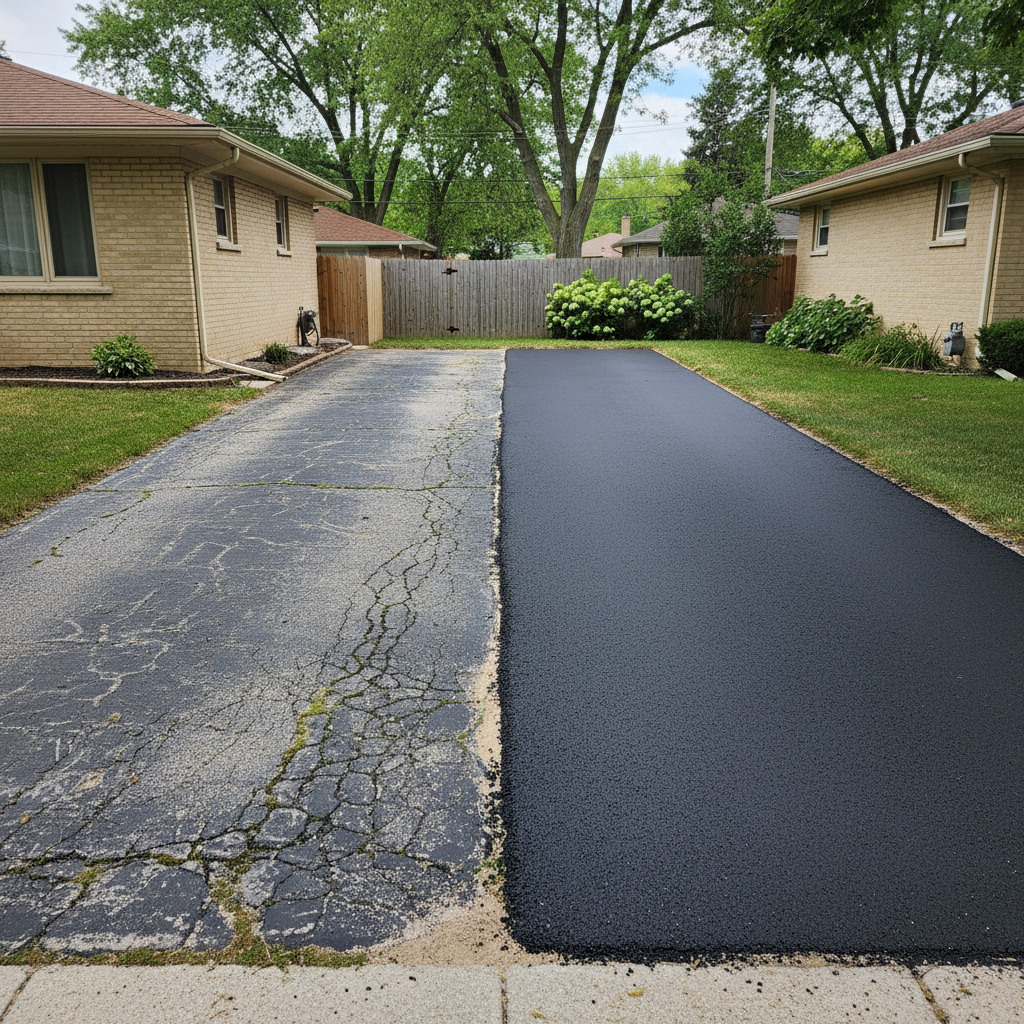
Alright, let's talk about driveways. You're probably thinking about putting in a new one or finally replacing that old, cracked-up mess, and you're likely wondering: should it be asphalt or concrete? It's a pretty big decision, honestly, and there's a lot of chatter out there about it. As someone who's been in this business for a good long while, I've seen both materials really hold up — and, unfortunately, fall apart — right here in Franklin Park. So, let's cut through all the noise and get right down to what you genuinely need to know.
Upfront Cost: Where Your Wallet Feels It First
When you're first getting estimates, asphalt almost always looks like the cheaper choice. For a standard residential driveway, you're generally looking at around $5 to $12 per square foot for asphalt. Concrete, on the other hand, can run you anywhere from $6 to $18 per square foot. So, for a typical two-car driveway, asphalt might initially save you a few thousand dollars when it's first installed.
Now, here's an interesting point, something most people don't think about until they get the quote: for smaller driveways, let's say anything under 600 square feet, concrete can sometimes even out or even become the more cost-effective option. That's because asphalt companies have pretty significant mobilization fees for their heavy equipment, no matter the size of the job. For a small project, those fees can really make the per-square-foot cost jump way up. But generally speaking, for most standard-sized driveways, asphalt will be less expensive to put in upfront.
Durability & Our Wild Illinois Weather
This is where things really get interesting, especially for those of us living in Franklin Park. Our winters are no joke, right? Those constant freeze-thaw cycles? They're truly the main enemy of any paved surface around here.
Asphalt: A Flexible Fighter
Asphalt is flexible. That's its big advantage, its superpower, in our climate. It can handle the ground shifting and expanding when water freezes and thaws much better than rigid concrete can. A well-installed asphalt driveway here in Franklin Park can easily last 15 to 25 years. But it's not completely indestructible. Our hot summers can make asphalt soften a bit, which can lead to tire marks or ruts if you're not careful where you park your car.
Concrete: Tough, But Less Forgiving
Concrete is definitely strong, there's no doubt about that. It's a rigid material, and it can last a good 30 to 40 years with proper installation and ongoing care. You certainly won't see it softening in the summer heat. However, that very rigidity is also its weakness when it comes to our freeze-thaw cycles. Water can seep into tiny pores, freeze, expand, and that can cause cracking and spalling (which is when the surface starts to flake off). If your concrete isn't mixed just right, or if the base isn't prepared perfectly for our clay-rich soils, you'll see those cracks much sooner than you'd like. Also, concrete is more susceptible to damage from road salt, so you've got to be careful about what you use for de-icing.
Maintenance: What You'll Be Doing (or Paying For)
Asphalt: Regular TLC
Asphalt needs regular attention, honestly. You'll want to sealcoat it every 2-3 years. This isn't just about making it look good; it really protects it from UV rays, water, and chemicals, which helps extend its life. If you skip the sealcoating, cracks and deterioration will happen a lot faster. Patching potholes and cracks is also a common task with asphalt, it's just part of owning one.
Concrete: Less Frequent, But Critical Care
Concrete is generally lower maintenance day-to-day. You'll still want to clean it occasionally and seal it, but usually every 3-5 years, maybe even 5-7 years. The big thing with concrete is addressing cracks or uneven sections quickly. If water gets into cracks and freezes, it'll make things much worse, something most people don't think about until it's too late. Concrete repair can be more complex and expensive than asphalt patching. If you have sunken sections, you might need concrete raising services, which we do here in Franklin Park, to lift it back into place.
Appearance: Beyond Just Black or Gray
For a long time, asphalt was just black and concrete was just gray. But that's not the case anymore. Both have come a long way, offering more choices than ever.
Asphalt: More Options Than You Think
You can get colored asphalt now, or even stamped asphalt that mimics the look of bricks, pavers, or stone. It's a way to get a high-end look at a lower cost than using those actual materials. You can also add decorative borders with brick or stone to a standard asphalt driveway to really make it pop, giving it some extra curb appeal.
Concrete: Design Versatility
Concrete offers a huge range of aesthetic options. You can choose from different finishes like a broom finish for texture, exposed aggregate to show off the stones, or even colored and stamped concrete to replicate brick, slate, or wood. These decorative options can truly boost your home's curb appeal and value, which is a nice bonus.
The Franklin Park Recommendation from Marconi Band Paving Co
So, what's the final word for your home here in Franklin Park?
If your budget is tight right now, and you're okay with regular sealcoating every few years, asphalt is a solid choice. It's forgiving with our ground movement, and with proper maintenance, it'll serve you well for 15-20 years. It's also a good option if you plan to sell your home in the next five years, as the lower upfront cost might be more appealing to potential buyers.
However, if you're looking for a long-term investment, something that will last 30-40 years with less frequent maintenance, and you want more design flexibility to really boost your home's value, concrete is often the better choice. Yes, the initial cost is higher, but over the lifespan of the driveway, it can actually be more economical because of its durability and lower maintenance needs. Plus, real estate agents will tell you a concrete driveway adds more perceived value to your home, which is always a good thing.
Ultimately, both can work for your property, but you need to go into it with open eyes about the costs and ongoing care involved. We at Marconi Band Paving Co have installed plenty of both, and we're always happy to talk through your specific situation and help you make the right call for your home.