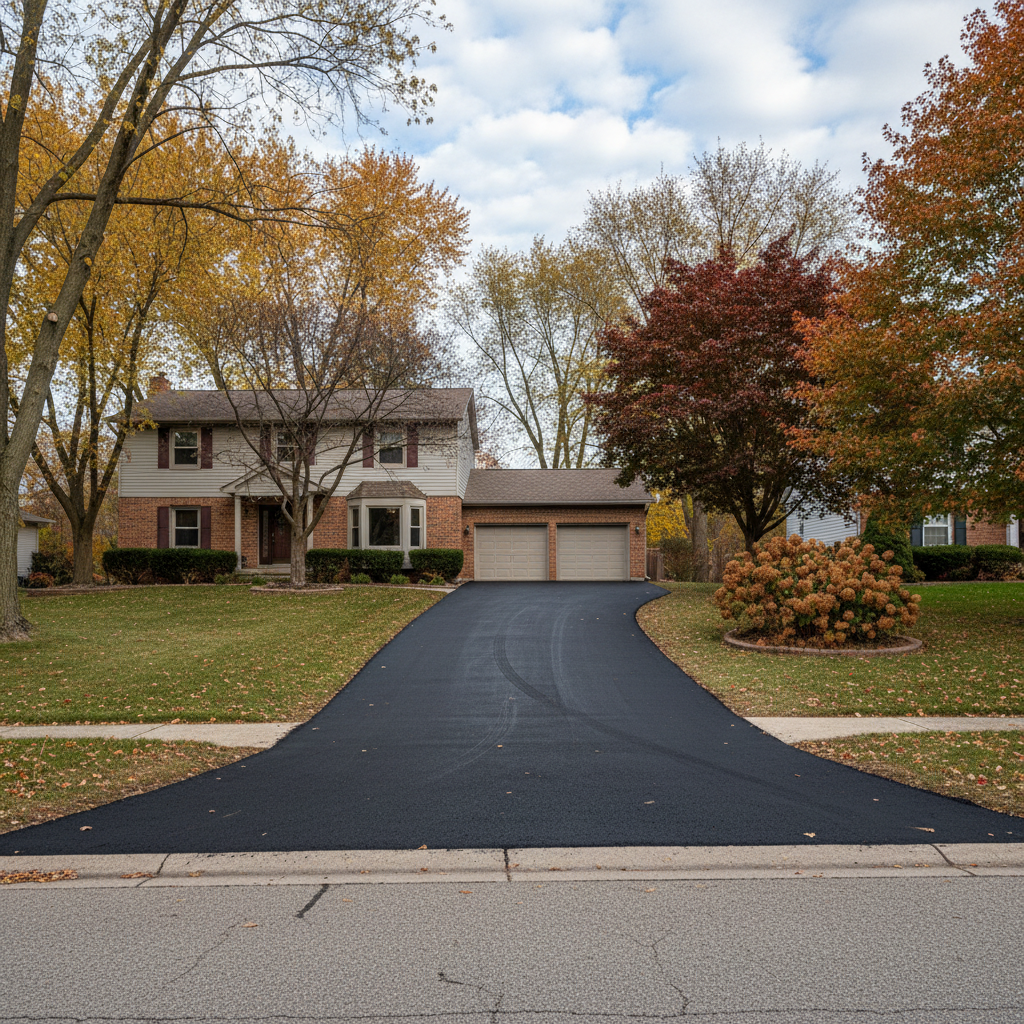
So, you're thinking about getting some asphalt work done on your property here in Franklin Park—maybe a fresh driveway or finally fixing that beat-up parking lot. Good idea. But before you jump in, let's chat about timing. Our Chicagoland climate isn't exactly easy on anything, and that really dictates how well your asphalt job turns out and, more importantly, how long it actually lasts.
When's the Best Time to Pave?
Honestly, the absolute best time for laying new asphalt or tackling bigger repairs is usually from spring through early fall. Think late April, May, June, and then again in September and early October. Why those months? It all boils down to temperature, really.
Asphalt needs warm—but not scorching hot—temperatures to cure right. When we're putting down hot mix asphalt, it's coming out of the truck at a blistering 300-325 degrees Fahrenheit. It has to stay hot enough for us to work it, compact it, and get it perfectly smooth before it cools too much. If it's too cold outside, say under 50 degrees, that asphalt just chills out way too fast. We can't get the compaction we need, and that means a weaker, less durable surface for you down the line. It's kind of like trying to bake a cake in a cold oven—it just doesn't come out right, does it?
On the flip side, extreme heat, like those brutal 90+ degree days we often get in July and August, can also cause issues. While the asphalt does stay hot longer, it can sometimes be too soft for proper compaction. Or, it might cause problems with the underlying base if too much moisture evaporates too quickly. Plus, let's be real, it's just plain tough on the crew, and their safety is always our top priority.
So, if you're planning a project, give us a call at Marconi Band Paving Co when the weather starts to warm up in the spring, or before it gets too cold in the fall. That's when we can truly do our best work for you.
Weather Conditions That Affect the Job
Beyond just temperature, there are a couple of other weather factors we're always keeping a close eye on:
- Rain: This one's a big deal. You simply cannot pave over wet ground. The sub-base needs to be completely dry and stable. If there's any moisture trapped underneath, it'll lead to soft spots, cracking, and premature failure. We've seen driveways in places like the North Park neighborhood, where the clay soil really holds water, suffer terribly if the base isn't properly dried and compacted before paving. If rain is in the forecast, we'll have to reschedule. It's a bummer, I know, but it's much better than a shoddy job.
- Humidity: High humidity can slow down how fast some asphalt products cure, especially sealants. It's usually not a deal-breaker for the paving itself, but it's definitely something we monitor.
- Wind: Strong winds can cool asphalt down faster, particularly on bigger jobs. It also makes applying sealcoat a real challenge, as it can dry too quickly or blow debris right onto the wet surface.
Protecting Your Investment Year-Round
Once your new asphalt is in, you want it to last, right? Here's how to protect it through our crazy Franklin Park seasons:
- Spring: After the thaw, check for any small cracks that might have popped up over winter. Get those filled early, before water seeps in and causes bigger problems with the next freeze. And keep it clean from debris, too.
- Summer: This is a good time for sealcoating, usually 6-12 months after the initial paving. It protects against harsh UV rays and water getting in. Just make sure it's not too hot when it's applied, and give it plenty of time to cure before you drive on it. Try to avoid parking really heavy vehicles in the same spot for long periods on those super hot days; the asphalt can soften and indent.
- Fall: Clear away leaves and any other organic matter. If you let them sit and decompose, they can hold moisture and stain the asphalt. Make sure your drainage is clear so water isn't pooling anywhere. Any last-minute crack filling before winter sets in is always a smart move.
- Winter: This is the toughest season for asphalt, no doubt about it. Minimize heavy plowing if you can; shoveling is much gentler. Avoid using metal-edged shovels directly on the surface. And be careful with de-icing chemicals. While rock salt is common, some de-icers can be harsh on asphalt over time. Sand, for instance, is a good alternative for traction without the chemical impact.
Look, your asphalt is a pretty big investment. Taking care of it, especially with our wild Chicago weather in mind, will save you headaches and money down the road. If you have any questions, just give us a shout. That's what we're here for, after all.