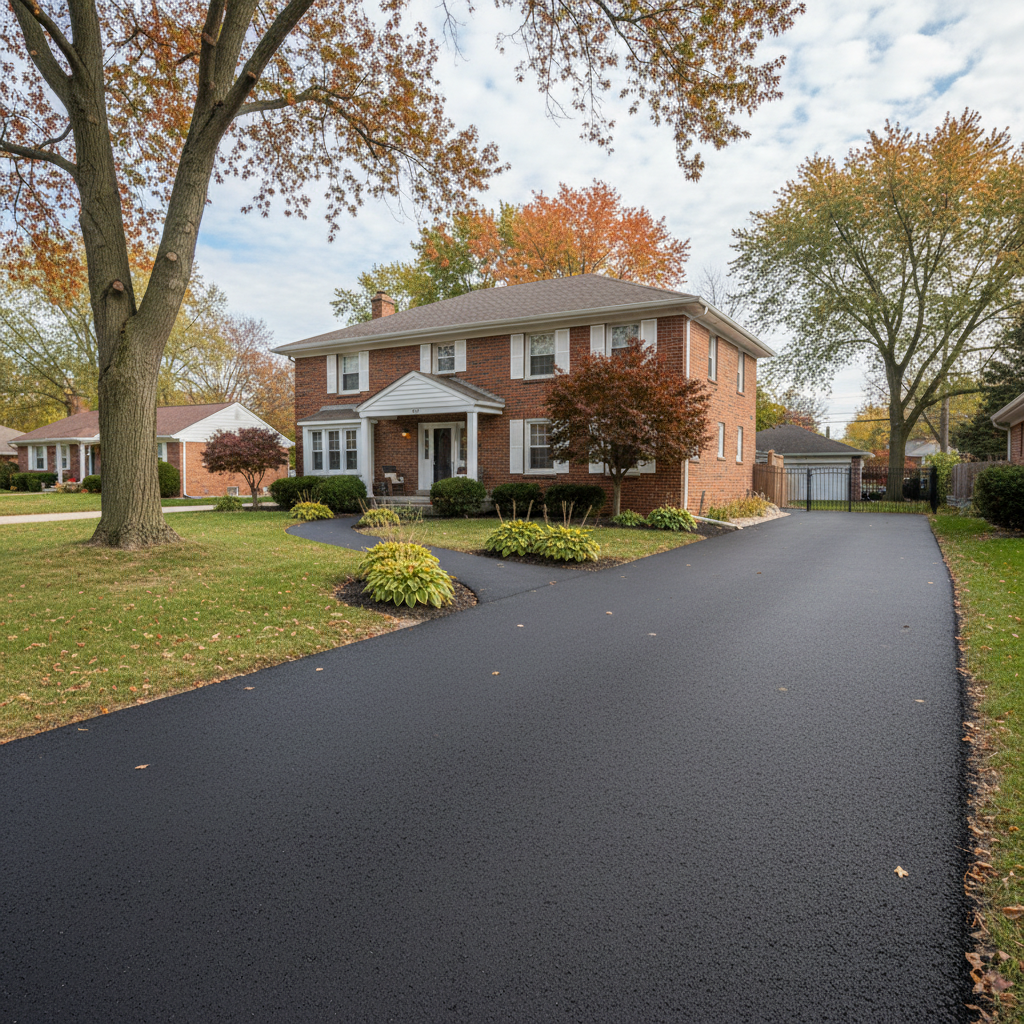
Ever wonder why your asphalt driveway seems to crack faster than your neighbor's, even if they were paved around the same time? A lot of it comes down to our local climate here in Franklin Park and how you treat your asphalt year-round. I've been doing this work for a long time with Marconi Band Paving Co, and I've seen it all. Let's talk about what our weather means for your driveway.
When's the Best Time to Pave or Repair Asphalt?
This is probably the most common question I get. You can't just pave whenever you feel like it. Asphalt needs specific conditions to cure properly and last. The sweet spot for us around here is usually late spring through early fall. Think May through September, sometimes into October if we get a mild stretch.
- Spring (May-June): This is prime time. The ground has thawed completely, and the temperatures are consistently warm enough. It lets the asphalt cool and harden correctly without getting shocked by cold snaps.
- Summer (July-August): Still good, but you've got to watch out for extreme heat. If it's too hot, like those 90-degree days we get, the asphalt can stay soft for longer, making it more susceptible to damage during the initial curing phase. We might adjust our schedule or start earlier in the day if it's a scorcher.
- Fall (September-October): Often excellent. The ground is warm, and the air temps are usually perfect. You just have to be careful not to push it too late. Once those overnight temperatures start dipping consistently below 50 degrees, it's not ideal for new paving. The asphalt cools too quickly, which can affect its compaction and long-term durability.
Trying to pave in winter or early spring when the ground is still frozen or thawing is a recipe for disaster. You'll end up with a driveway that won't last, and you'll be calling me back sooner than you'd like.
Weather Conditions That Really Matter
It's not just about the temperature; other weather factors play a big role too. You might have a perfectly warm day, but if it's raining, we can't pave. Water and fresh asphalt don't mix. It prevents proper bonding and compaction, leading to a weak surface that'll break down fast.
Humidity can also be a factor, though less critical than temperature and rain. High humidity can slow down the curing process a bit, but it's usually manageable. What we really keep an eye on are those sudden cold fronts or heavy rain forecasts. If the forecast looks iffy, we'll talk to you about rescheduling. It's always better to wait for optimal conditions than to rush a job that won't hold up.
We also have to consider the ground underneath. Our soil here, especially in some of the older subdivisions around Mannheim Road, can be pretty clay-heavy. That means it holds water, and if it's not properly drained and compacted before we lay asphalt, you're going to see issues like cracking and heaving down the line, regardless of how good the asphalt itself is.
Protecting Your Asphalt Investment Year-Round
Once you've got that beautiful new driveway, you want it to last, right? Here's how to keep it in top shape:
- Sealcoating: This is huge. I recommend sealcoating every 2-3 years. It's like sunscreen for your driveway. It protects against UV rays, water penetration, and even chemicals like oil and gas. Skipping this is like buying a new car and never washing it.
- Crack Sealing: As soon as you see a crack, even a small one, get it sealed. Cracks let water get underneath the asphalt, and when that water freezes and expands in winter, it makes the cracks much, much worse. This freeze-thaw cycle is a killer for driveways in our climate.
- Keep it Clean: Don't let oil spills or chemicals sit on your driveway. Clean them up quickly. Also, avoid parking heavy vehicles in the same spot all the time, especially in hot weather when the asphalt is softer.
- Snow Removal: Be careful with snow plows and shovels. Don't dig into the asphalt. Using a snow blower or a shovel with a plastic edge can help prevent gouges.
- Drainage: Make sure water drains away from your driveway, not towards it or pooling on it. Proper drainage is key to preventing water damage and premature breakdown.
Taking a little bit of care goes a long way. If you've got questions about your driveway or need some work done, give us a call at Marconi Band Paving Co. We're always happy to give you an honest assessment.